
On a working CAT machine whether it’s a C7 on a construction site in Dubai, a C15 powering a generator in a Sharjah industrial facility, or a 3126 running a heavy truck across Abu Dhabi. When a CAT injector starts to fail, the symptoms don’t always arrive dramatically. Rough idle, black smoke under load, higher fuel consumption, misfires on cold starts these show up gradually, and on a busy site they get attributed to other causes until the engine is down and the job has stopped. Understanding how Caterpillar’s different injector systems work, which engines use which type, and what the warning signs actually look like makes the difference between catching a problem early and dealing with a full engine-off repair at the worst possible time.
Three Injector Systems Across the CAT Range
Caterpillar has used three distinct fuel injection systems across its engine range. They are not interchangeable, and diagnosing or replacing a CAT injector correctly starts with knowing which system the engine uses.
HEUI Hydraulically Actuated, Electronically Controlled Unit Injector
The HEUI system uses high-pressure engine oil supplied by an injection actuation pressure (IAP) pump to actuate the injector plunger hydraulically, while the solenoid controls timing and fuel quantity electronically. HEUI injectors are visually identifiable by their square-topped body and side oil inlet port.
EUI Electronic Unit Injector
Unlike HEUI, these injectors are mechanically actuated by a rocker arm and pushrod engine oil pressure is not involved in actuation. The solenoid controls timing and metering electronically, but the injection force comes from the mechanical cam-driven system.
Common Rail
The fuel rail is pressurised to over 25,000 PSI by a high-pressure pump, and each injector receives fuel at that pressure, firing at precise intervals controlled by the ECM. At those pressures, fuel cleanliness is critical even microscopic contamination acts as an abrasive on the control valve seat inside the injector. Common rail CAT injectors are sensitive to fuel quality in a way that HEUI and EUI systems are not. Contaminated or water-affected fuel that would cause manageable problems on an older engine can destroy a common rail injector rapidly.
Failure Symptoms by Injector Type
Not every injector failure looks the same. Knowing which symptoms point where saves diagnostic time:
| Symptom | Most Likely Injector System | What It Points To |
| Cold-start misfire, rough idle when cold | HEUI (C7, C9, 3126) | Spool valve stiction from oil varnish |
| Black smoke under load, power loss | Any system | Injector not delivering correct fuel quantity |
| High fuel consumption, no power | EUI (C15, 3406E) | Worn plunger, follower, or spring |
| Cylinder cut-out at idle | HEUI or Common Rail | Individual injector solenoid failure |
| Engine knock, uneven firing | Common Rail (C6.4, C6.6) | Contamination damage to control valve seat |
| Hard start hot and cold | HEUI | IAP pump or injector actuation pressure issue |
Oil Condition and the HEUI System
This is the maintenance connection that gets ignored most often on CAT machines running HEUI systems in the UAE. The HEUI injector uses engine oil as its actuation fluid at high pressure. Oil that is overdue for a change, contaminated with fuel, or at the wrong viscosity directly affects injection pressure and response.
Genuine vs. Non-Genuine: What the Difference Actually Costs
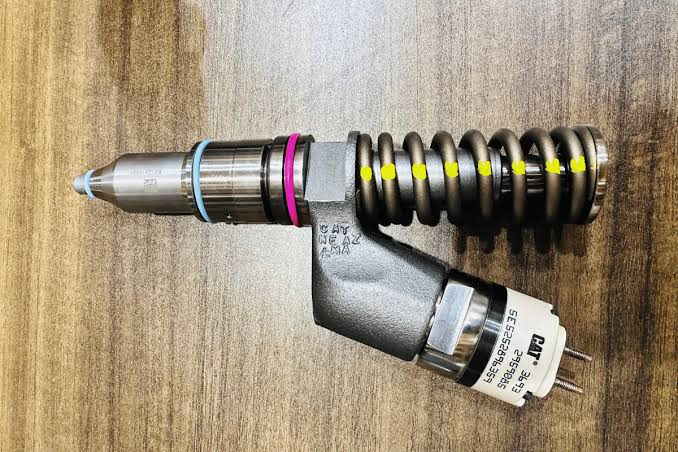
Aftermarket injectors are available across the UAE market at lower prices than genuine CAT injectors. The price difference looks attractive until the failure mode of a non-genuine part shows up in service.
Genuine CAT injectors are manufactured and tested to Caterpillar’s specifications spray pattern, leakage rate, electrical resistance, and flow rate. Each unit is tested before it ships. Caterpillar also offers remanufactured injectors (identified by 10R prefix part numbers) that have been rebuilt to new-part specifications.
Non-genuine injectors may pass initial bench tests but lack the quality control that ensures consistent performance across temperature extremes, high-cycle operation, and UAE operating conditions. On a C15 generator running 24 hours in a Sharjah industrial facility, the cost of an injector failure lost production, emergency callout, potential engine damage from an uneven-firing cylinder quickly exceeds whatever was saved on the part.
Final Take
A CAT injector failure rarely comes without warning the symptoms are there if you know what to look for and which system the engine runs. Matching the right diagnosis to the right injector type, using genuine or factory-remanufactured parts, and keeping oil and fuel quality in check are what keep a Caterpillar engine delivering the hours it was built for. For operators and fleet managers in the UAE needing genuine CAT injectors or technical guidance on which part fits which engine, Al Burhan Spares has been the address on Caterpillar Road in Sharjah for over three decades. Our team of experienced technicians can assist with part identification, injector selection by engine model and serial number, and sourcing across the full CAT parts range. Visit our website Al Burhan Spares or contact our team at +971 56 669 0325.
FAQs
What is a HEUI injector and which CAT engines use it?
HEUI stands for Hydraulically Actuated, Electronically Controlled Unit Injector. It uses high-pressure engine oil to actuate the injector plunger. CAT engines using HEUI include the 3126, 3126B, 3126E, C7, and C9.
Do CAT injectors need to be programmed after replacement?
On C7 and C9 HEUI engines, yes. Each injector has a calibration trim code that must be uploaded to the ECM after installation to balance fuel delivery across cylinders.
What causes cold-start misfires on C7 and C9 engines?
The most common cause is spool valve stiction inside the HEUI injector, typically caused by oil varnish build-up from degraded or overdue engine oil. Regular oil changes with the correct specification are the primary prevention.
Are remanufactured CAT injectors a reliable option?
Yes. Caterpillar’s remanufactured injectors (10R prefix part numbers) are rebuilt to new-part specifications and carry the same warranty as new units. They are a legitimate option for fleet operators managing costs.
Why does fuel quality matter more on common rail engines?
Common rail systems operate at over 25,000 PSI. At those pressures, fuel contamination including water and particulates erodes control valve seats rapidly. Fuel quality standards that are adequate for HEUI systems are insufficient for common rail.


